
Cataract

Cataract Treatment at Rajan Eye Care
At Rajan Eye Care Hospital, we provide advanced cataract treatment and surgery to restore clear vision.
Using state-of-the-art technology, our team offers safe, effective solutions for all types of cataracts, with personalized care from consultation through recovery.
What is Cataract?
Cataracts are a very common eye condition. When the lens inside the eye gradually changes and becomes less transparent (clear), misty, or cloudy, it is said to have a cataract.
Causes of Cataract
Cataracts often develop as a part of the natural aging process, but other factors can contribute as well. Genetics, lifestyle choices, and certain health conditions are all known to play a role in the formation of cataracts. Understanding these causes can help in managing risks and seeking timely cataract treatment.
- Aging
- Genetics
- Lifestyle choices
- Health conditions
Signs and Symptoms of Cataracts
Clouded, blurred or dim vision
Increasing difficulty with vision at night
Sensitivity to light and glare
Seeing “halos” around lights
Difficulty reading without bright light
Fading or yellowing of colors
Double vision in a single eye
Evolution of Cataract
Cataracts are a common eye condition that can develop slowly over time, gradually affecting your vision. Here is the journey from normal, healthy eyes to the development of cataracts, and the various stages and factors involved in the progression and need for cataract treatment.
-
1
Healthy Eyes and Clear Vision
Normal Eye Structure: A healthy eye has a transparent and flexible lens, which allows light to pass through unobstructed, providing clear vision without the need for cataract eye surgery.
Clear Vision: The lens in a healthy eye focuses light onto the retina, resulting in sharp and clear vision.
-
2
The Early Stages of Cataracts
Age-Related Changes: Aging can lead to subtle changes in the lens, such as decreased flexibility and the accumulation of proteins.
Vision Changes: Early signs of cataracts include mild blurriness, increased sensitivity to glare, and difficulty reading in low light, which may indicate the future need for cataract treatment.
-
3
Progression of Cataracts
Intermediate Stage: As cataracts progress, the lens becomes increasingly cloudy, which can cause more significant vision problems.
Impact on Daily Life: As cataracts progress, individuals may face challenges including difficulty driving, reading, or recognizing faces.
-
4
Advanced Cataracts
Severe Clouding: Advanced cataracts result in a heavily clouded lens, severely impairing vision and often necessitating cataract eye surgery.
Visual Impairment: Advanced cataracts have a significant impact on quality of life, as individuals may struggle to perform basic tasks independently, making cataract treatment essential.
Treatment of Cataract
The only effective cataract treatment is surgery to remove the cloudy lens and replace it with an artificial lens implant. This is done by an ophthalmologist (eye specialist) at a hospital. Lasers aren’t used to remove cataracts and there is no evidence to suggest that changing your diet, taking vitamins or using eye drops can cure cataracts.
When does a cataract require removal?
Surgery may not be needed
A cataract should not be removed simply because it is present. Many people have cataracts that do not cause blurred vision, interfere with activities of daily living, or otherwise prevent them from leading active and productive lives. In such cases, these individuals may not need cataract treatment or surgery.
Time to consider surgery
However, if an individual has blurred vision that makes it difficult to read print or read signs while driving; has disabling glare while driving at night; or has difficulty engaging in daily activities, it is time to consider cataract surgery.
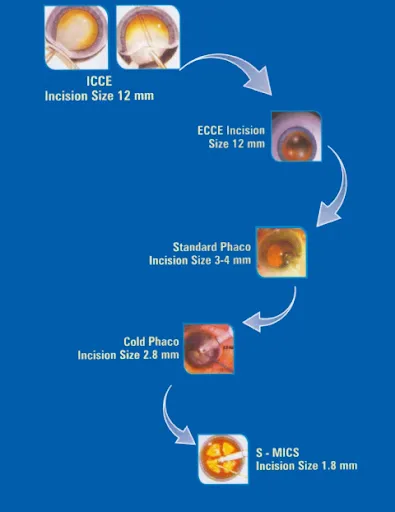
At Rajan Eye Care Hospital we remove cataracts by using an ultrasonic aspiration technique called Phacoemulsification. This involves a small incision in the cornea and patients are implanted with intraocular lenses.
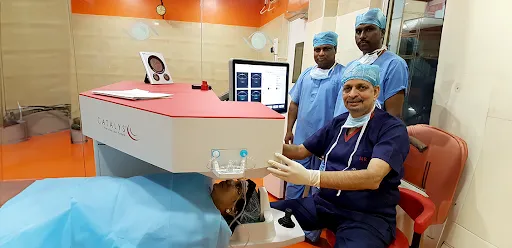
Robotic Cataract Treatment – Femto Laser System
The Robotic Cataract Eye Surgery with the CATALYS Femto Cataract System at Rajan Eye Care is a state-of-the-art bladeless system specifically engineered to meet the current challenges while performing cataract surgery. It delivers the best possible clinical outcomes and reliably outstanding results for patients.
Cataract eye surgery has entered a new era of precision and accuracy with the advent of robotic-assisted cataract treatment using the Femto Laser System. This groundbreaking technology has revolutionized the way cataracts are treated, offering patients a safer and more precise surgical experience.
The Rajan Eye Care – Femto Cataract System Advantage
- Safe and Precise Procedure
- Premium patient experience
- Walk-In/Walk-Out Procedure
- Cutting Edge Technology
- Faster Surgery & Quick Visual Recovery
- No Stitch, No Injection
- Minimal Postoperative Restrictions
- World Class Surgical Environment
- Customized to patient's cataract condition
- Enhanced accuracy with laser-assisted technology
Our Cataract Technologies
Femto Cataract
The femtosecond laser technology that brought new levels of safety, accuracy, and predictability to LASIK surgery is also now advancing cataract surgery technology at Rajan Eye Care Hospital. This state-of-the-art Robotic Cataract Surgery with the CATALYS Femto Cataract System is personally customized to each patient's cataract condition. Femto Laser technology ensures treatment with the highest level of precision.
The Stellaris MICS Platform
Innovative design concepts incorporated into the Stellaris Vision Enhancement Systems make it a superlative choice for MICS. They include monitoring and maintenance of fluidic parameters, millisecond-level surgeon control of ultrasound power, and ergonomic comfort and adaptability for any surgical technique.
- High safety standards
- Quicker and sutureless surgery
- Better quality of vision (AO Technology)
- Surgical flexibility and control
- Astigmatism Neutral (Least dependency on spectacles)
Alcon Infiniti Cataract Enhancement System
Another high-tech solution is the Ozil, Torsional Phacoemulsification technology. With enhanced fluidic management and surgical control, it delivers a strategic advantage in customized phaco procedures.
Types of Intraocular Lenses (IOL)
Intraocular lenses (IOLs) are artificial lenses surgically implanted in the eye, typically used to treat cataracts or other vision issues where the natural lens of the eye is dysfunctional or needs to be replaced.
Monofocal IOLs
The most common type of IOLs, they have one fixed focus and can be set to improve vision at distances. Most people who choose monofocal IOLs have them set for clear distance vision and use reading glasses for near tasks.
Multifocal IOLs
These lenses have multiple zones set at different powers to provide clear vision at various distances—near, intermediate, and far. They can reduce the need for glasses or contact lenses.
Toric IOLs
Designed for patients with astigmatism, toric IOLs have different powers in different meridians of the lens to correct the uneven curvature of the cornea or lens in the eye, greatly reducing or eliminating the need for glasses for distance vision after cataract surgery.
Extended Depth of Focus (EDOF) IOLs
EDOF IOLs are designed to provide a continuous range of vision from distance to intermediate (and sometimes near) without the need for glasses. They enhance depth of focus, which is beneficial for patients seeking a broader range of clear vision.
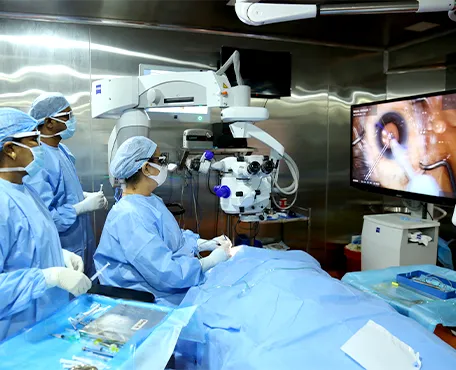
3D Cataract Eye Surgery
3D cataract eye surgery refers to a modern approach to cataract surgery that utilizes 3D visualization technology. In traditional cataract surgery, surgeons look through a microscope to view the surgical area. In 3D cataract treatment, the surgeon wears special glasses to view a high-definition, three-dimensional image of the eye on a monitor. This technology is often coupled with advanced imaging and surgical equipment.
Key Features and Benefits of 3D Cataract Surgery
Enhanced Visualization
The 3D view provides the surgeon with a magnified, high-resolution image of the eye's structures, which can improve precision during the surgery.
Ergonomic Advantages
Since the surgeon is looking at a screen instead of through a microscope, it can be less physically straining, potentially reducing fatigue and improving performance.
Educational Benefits
The ability to project the surgery on a screen in real-time allows for better teaching opportunities for medical students and trainees.
Potential for Improved Outcomes
The enhanced view may help the surgeon perform the procedure more precisely, potentially leading to better surgical outcomes.
Frequently Asked Questions
Common questions about cataract surgery.
01Is cataract surgery painful?
No, cataract surgery is typically painless. Local anesthesia or numbing eye drops are used to ensure your comfort throughout the procedure.
02How long does cataract surgery take?
The procedure usually takes about 15-20 minutes. However, you should plan for a few hours at the clinic for preparation and post-surgery observation.
03How soon will I notice an improvement in my vision after surgery?
Most patients experience improved vision within a few days, but full recovery may take a few weeks.
04Will I need glasses after cataract surgery?
It depends on the type of intraocular lens (IOL) chosen. Multifocal and toric lenses may reduce the need for glasses, but some patients may still need glasses for reading or other specific tasks.
05Are there any risks associated with cataract surgery?
Cataract surgery is generally very safe, with a high success rate. However, as with any surgery, there are minor risks, which your surgeon will discuss with you before the procedure.
06What should I avoid after cataract surgery?
After surgery, you should avoid strenuous activities, bending over, and rubbing your eyes. Our team will provide detailed post-surgery care instructions to support a smooth recovery.
07Can both eyes be treated at the same time?
Typically, cataract surgery is performed on one eye at a time to allow each eye to heal properly. The second eye can be treated a few weeks later.
08What happens if I delay cataract surgery?
Delaying cataract surgery can result in worsening vision and make daily tasks more challenging. In some cases, waiting too long can lead to complications.
09Are cataracts preventable?
While cataracts are often age-related, you can lower your risk by protecting your eyes from UV light, not smoking, and managing health conditions like diabetes.
10How do I know if cataract surgery is right for me?
If cataracts are affecting your vision and quality of life, it may be time to consider cataract surgery. Our specialists can assess your eyes and recommend the best treatment plan for you.
Is cataract affecting your daily life?
Our specialists can assess your eyes and recommend the best treatment plan for you at T Nagar, Adyar or Velachery.

 Call Now

